Back to homepage
Back to homepage
Haykoff Gallery
Haykoff Gallery
Haykoff Gallery
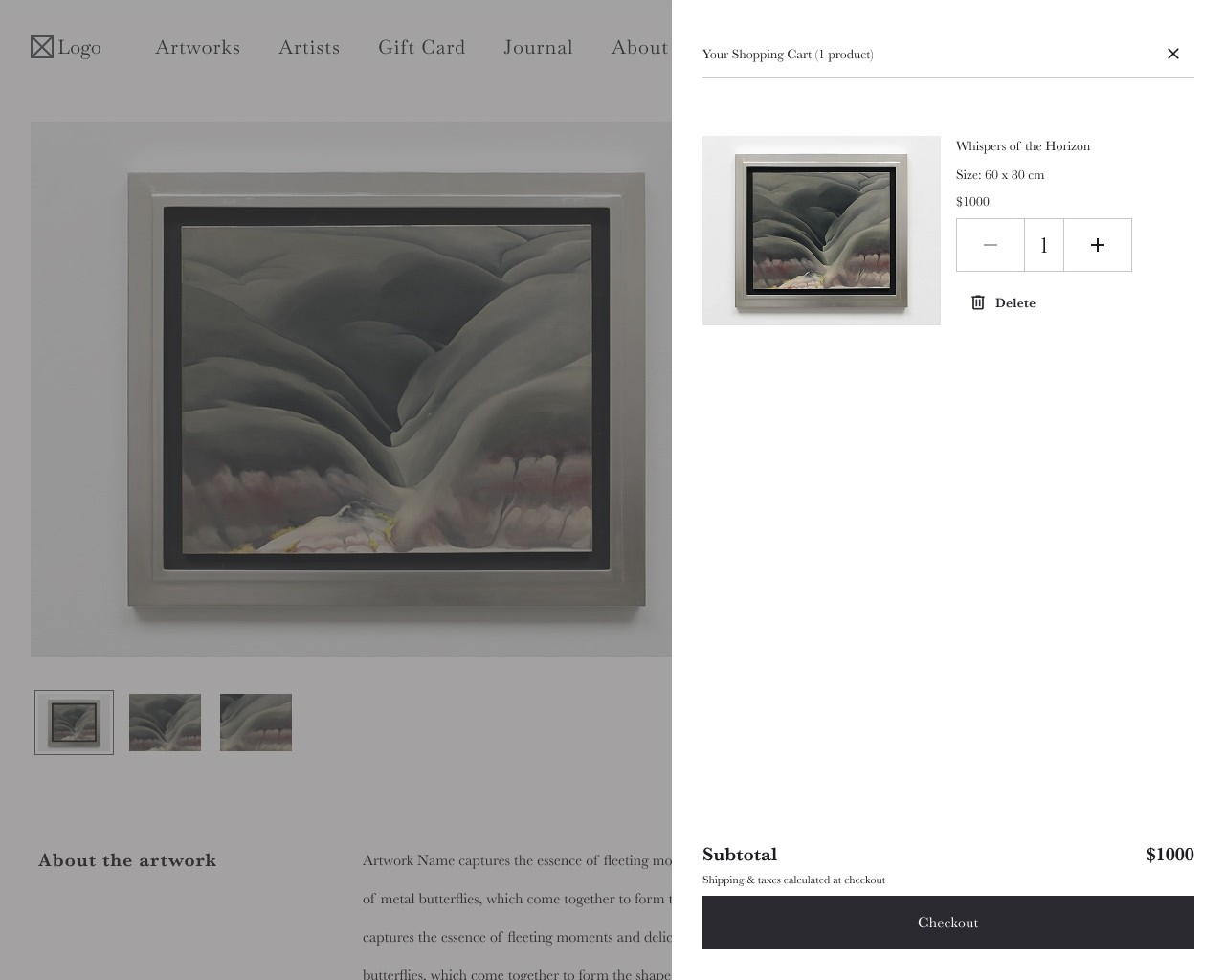
I worked across the full product design process, from research and problem framing to UI handoff, crafting an experience centered on effortless browsing and a checkout flow that keeps attention on the artwork.
I worked across the full product design process, from research and problem framing to UI handoff, crafting an experience centered on effortless browsing and a checkout flow that keeps attention on the artwork.
I worked across the full product design process, from research and problem framing to UI handoff, crafting an experience centered on effortless browsing and a checkout flow that keeps attention on the artwork.
Timeline
5 months
5 months
Scope
E-commerce
E-commerce
my Focus
Research → IA → UI → Handoff
Research → IA → UI → Handoff

Context
Context
An established gallery with no presence online
An established gallery with no presence online
Haykoff is a well-established physical gallery with a loyal collector base, but its catalog existed entirely offline. This limited discoverability for new buyers and gave existing collectors no way to browse or revisit artworks between visits. The goal was to bring the collection online while preserving the trust, credibility and curated experience the gallery had built offline.
Haykoff is a well-established physical gallery with a loyal collector base, but its catalog existed entirely offline. This limited discoverability for new buyers and gave existing collectors no way to browse or revisit artworks between visits. The goal was to bring the collection online while preserving the trust, credibility and curated experience the gallery had built offline.
Problem
Problem
Making art accessible beyond the gallery
Making art accessible beyond the gallery
Research and stakeholder insights revealed the key challenges:
• Artworks lacked digital visibility. Users had no centralized way to browse the collection, making discovery dependent on physical visits or direct communication with the gallery.
• Trust signals were limited online. First-time buyers needed more context around artworks, artists and pricing before feeling comfortable expressing purchase intent.
• The path from discovery to inquiry was unclear. Users could appreciate artworks, but there was no structured way to move from browsing to taking action.
Research and stakeholder insights revealed the key challenges:
• Artworks lacked digital visibility. Users had no centralized way to browse the collection, making discovery dependent on physical visits or direct communication with the gallery.
• Trust signals were limited online. First-time buyers needed more context around artworks, artists and pricing before feeling comfortable expressing purchase intent.
• The path from discovery to inquiry was unclear. Users could appreciate artworks, but there was no structured way to move from browsing to taking action.
Research
Research
Building clarity through competitive and contextual analysis
Building clarity through competitive and contextual analysis
Method 1: Competitor teardown
Analyzed Artsy and Saatchi Art to understand marketplace structure, discovery patterns and purchase flows.
Method 2: Heuristic UX audit
Evaluated key flows across art platforms to identify friction in browsing, trust-building and conversion.
Method 3: Stakeholder workshop
Aligned with stakeholders on business goals, audience needs and technical constraints for the MVP.
Method 1: Competitor teardown
Analyzed Artsy and Saatchi Art to understand marketplace structure, discovery patterns and purchase flows.
Method 2: Heuristic UX audit
Evaluated key flows across art platforms to identify friction in browsing, trust-building and conversion.
Method 3: Stakeholder workshop
Aligned with stakeholders on business goals, audience needs and technical constraints for the MVP.
Method 1: Competitor teardown
Analyzed Artsy and Saatchi Art to understand marketplace structure, discovery patterns and purchase flows.
Method 2: Heuristic UX audit
Evaluated key flows across art platforms to identify friction in browsing, trust-building and conversion.
Method 3: Stakeholder workshop
Aligned with stakeholders on business goals, audience needs and technical constraints for the MVP.




Decisions
Decisions
Key decisions defining hierarchy and trust
Key decisions defining hierarchy and trust
Decision 1: Used curated collections as the primary entry point instead of upfront filters to support intuitive, theme-based exploration.
Decision 2: Prioritized artwork as the dominant interface element and minimized UI chrome to create an immersive, visually driven browsing experience.
Decision 3: Integrated trust signals directly into cards and previews to support purchase confidence.
Decision 1: Used curated collections as the primary entry point instead of upfront filters to support intuitive, theme-based exploration.
Decision 2: Prioritized artwork as the dominant interface element and minimized UI chrome to create an immersive, visually driven browsing experience.
Decision 3: Integrated trust signals directly into cards and previews to support purchase confidence.

Outcome
Outcome
Delivery status, stakeholder feedback and success signals
Delivery status, stakeholder feedback and success signals
The key flows were completed and prepared for implementation, with positive alignment from stakeholders. Success would be measured through engagement with collections, time spent exploring content and conversion from browsing to deeper item views or purchase intent.
The key flows were completed and prepared for implementation, with positive alignment from stakeholders. Success would be measured through engagement with collections, time spent exploring content and conversion from browsing to deeper item views or purchase intent.
The key flows were completed and prepared for implementation, with positive alignment from stakeholders. Success would be measured through engagement with collections, time spent exploring content and conversion from browsing to deeper item views or purchase intent.
More projects
More projects

EPAM- Matching Advisor
EPAM- Matching Advisor
Partnered closely with the Product Manager to design a new feature from the ground up, translating business goals and user needs into user flows, interaction patterns, and final designs.
Partnered closely with the Product Manager to design a new feature from the ground up, translating business goals and user needs into user flows, interaction patterns, and final designs.

PPG Stores
PPG Stores
Collaborated with cross-functional teams to add new features, validate solutions and iterate based on feedback, while supporting implementation through detailed design handoff and reviews.
Collaborated with cross-functional teams to add new features, validate solutions and iterate based on feedback, while supporting implementation through detailed design handoff and reviews.